
 SIGN IN
Aspects of the Vocal Package
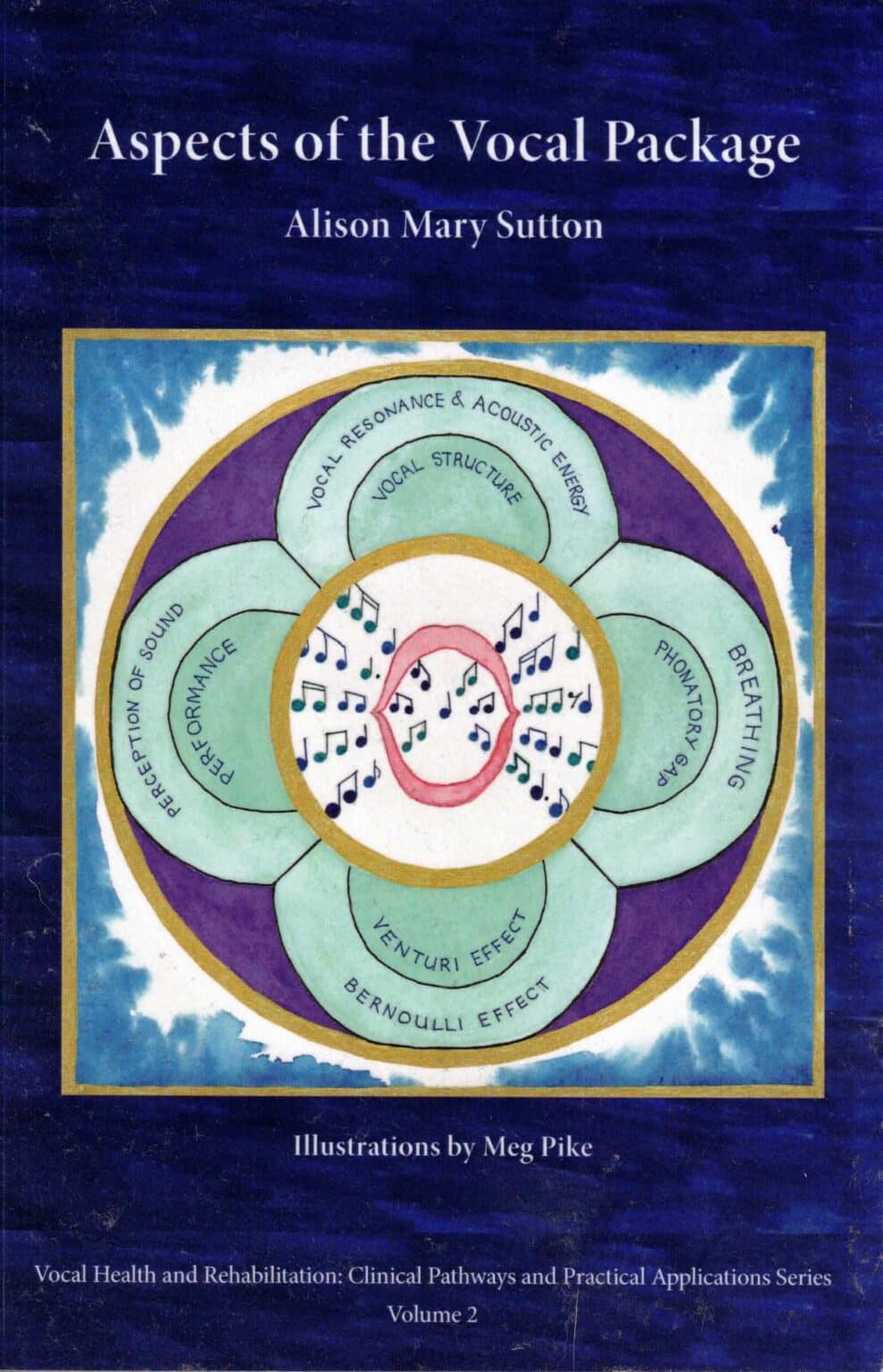
Aspects of the Vocal Package
Alison Mary Sutton
Illustrations by Meg Pike
144 pps, published independently, November 2025
ISBN-13: 979-8271377358

Available from Amazon:

Aspects of the Vocal Package by Alison Mary Sutton forms part of a wider series and reflects the breadth of her experience as a singer, teacher and clinician. What I particularly appreciated from the outset was the clear emphasis not only on vocal health, but on the joy of singing and self-expression. That thread runs gently but consistently throughout the book.
In her introduction Alison shares her own story. She began singing with a deep love of expression, only to be discouraged by a thoughtless teacher. The resulting nerves and stage fright affected the early part of her career. Later experiences in opera and a move into teaching broadened her professional world. A diagnosis of breast cancer, followed by depression, led her to explore psychology in greater depth. That personal journey clearly informs her work. There is a thoughtful blending of clinical understanding with compassion and humanity that feels grounded and real.
The structure of the book is clear and reassuring. The first half focuses on the science and clinical aspects of the voice, particularly phonatory gap pathology. The second half presents a detailed case study. The layout guides the reader steadily through increasingly complex ideas without feeling overwhelming.
Alison opens with a clear explanation of how the voice works, supported by well judged diagrams. The writing is neither overly technical nor simplified to the point of losing depth. She continually brings us back to the importance of balanced muscle activity in establishing healthy vocal patterns, while acknowledging the complexity and adaptability of the voice.
Her explanation of the Bernoulli and Venturi effects is detailed and carefully connected to vocal fold vibration, air pressure and flow. Useful quotations from Ingo Titze and DJ Brown provide strong scientific grounding. Resonance and subglottal pressure interactions are also explored, building a coherent framework before moving into pathology.
The overview of phonatory gap pathology flows naturally from the earlier chapters. The diagrams in this section are especially helpful in clarifying pressure and flow. With my own science background, I valued the precision. Readers without that background may find certain sections stretching, yet Alison’s explanations are clear and readable. Her discussion of vocal tract inertance is one of the clearest I have come across, supported again by reference to Titze.
Chapters on sound perception, breath and the realities of performance create a thoughtful bridge into the case study. The section on breath particularly resonated with me. The tendency for singers to drive the breath is something many of us see regularly in teaching. When working with phonatory gap, this becomes crucial.
The second half centres on Marjorie, a 46 year old classical mezzo soprano and music therapist diagnosed with a small submucosal swelling on the right vocal fold, alongside a phonatory or glottal gap during phonation. The diagnostic process and rationale for rehabilitation are clearly explained over four main sessions and a follow -up. The inclusion of audiovisual material through links and QR codes is excellent. For those of us working in vocal habilitation, this offers valuable and generous insight into the rehabilitation journey.
We see what a phonatory or glottal gap looks like, followed by a clear outline of Marjorie’s rehabilitation programme. Individual sessions are then explored in detail, supported by photographs, diagrams and exercises. The presentation is attractive and practical, making complex clinical work feel accessible.
Session 2 introduces reed and inertance interactions alongside a carefully graded sequence of breathing exercises designed to support control and avoid parasympathetic gasping. The progression is thoughtful and well paced. In session 3, Alison explores speaking and identity, including reflections on consonants with reference to Oren Brown. From my own thirty years of teaching experience, I would suggest that the treatment of consonants and vowels varies across genres. What serves a classical singer may not always translate directly into contemporary styles.
For Marjorie, however, the approach appears carefully chosen and effective, particularly in addressing the phonatory gap. Later sections, including the discussion of consonants on the beat in Session 4 and the use of NG into vowel for brighter resonance in the follow-up session demonstrate close attention to tongue position and acoustic outcome.
Overall, Aspects of the Vocal Package feels like a generous and considered contribution to our field. Alison brings together science, psychology and artistry in a way that reflects both professional expertise and personal resilience. For teachers, therapists and vocal habilitation professionals, this book offers intellectual depth, practical guidance and a quiet reminder that behind every clinical process is a human being who simply wants to sing with freedom and confidence.

Review is by Anne Leatherland who is a singing and speaking coach based in Staffordshire, UK.
Last updated 22 March 2026