
 SIGN IN
Voice Work: Art and Science in Changing Voices (2nd Edition)
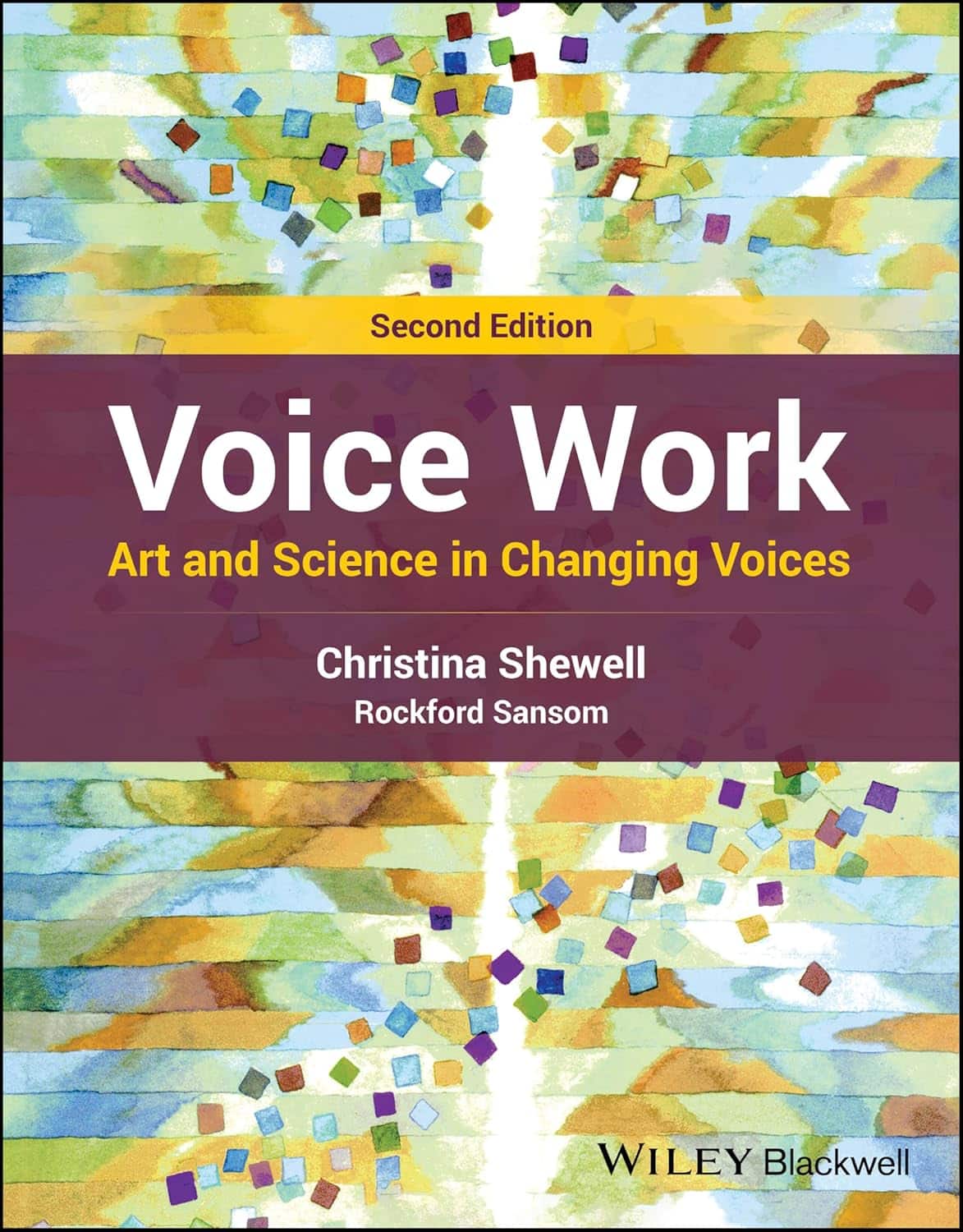
Voice Work: Art and Science in Changing Voices (2nd Edition)
Christina Shewell & Rockford Sansom
Wiley-Blackwell, NJ; 2025
ISBN 9781119933205
470 pps
Reviewed by Simone Laraway
As a practitioner working across voice, communication and wellbeing, I found Christina Shewell’s Voice Work to be one of the most thorough and practically grounded texts available to those of us supporting vocal development. It is a substantial contribution to the field, combining clinical insight, pedagogical clarity and a strong understanding of the lived experience of voice users.
What distinguishes this book is its breadth and structure. Shewell brings together anatomy, physiology, acoustics, psychology and communication science in a way that is coherent and accessible. The early chapters provide a clear foundation in vocal function, with explanations that are technically accurate yet written in a style that supports both new and experienced practitioners. Her approach consistently reinforces the idea that effective voice work requires an understanding of the whole person, not just the mechanics of sound production.
The section on vocal qualities is particularly valuable. Shewell offers a detailed and systematic vocabulary for describing vocal characteristics, supported by perceptual cues and practical examples. This is an area where many texts remain vague or overly subjective, but Shewell manages to articulate distinctions that are genuinely useful in assessment and intervention. I have already found myself adopting some of her terminology when discussing vocal qualities with clients and colleagues.
Another strength of the book is its emphasis on listening. Shewell frames listening not simply as a diagnostic skill but as a professional discipline that underpins all effective voice work. Her guidance encourages practitioners to listen analytically while maintaining awareness of the individual’s emotional, physical and communicative context. This balanced perspective reflects the realities of clinical and educational practice, where technical assessment and human understanding must coexist.
The practical exercises and intervention strategies throughout the book are well considered. They are grounded in clinical experience, clearly explained, and adaptable to a range of client groups. I found her work on tension patterns, breath use and vocal ease particularly relevant, especially for clients who present with a combination of functional, behavioural and stress‑related vocal challenges.
Importantly, Shewell writes with professional humility. She acknowledges the diversity of approaches within the field and positions her work as part of an evolving discipline. This makes the text both credible and inclusive, and it invites practitioners to integrate the material into their own frameworks rather than adopt it uncritically.
Overall, Voice Work is a highly valuable resource for speech and language therapists, singing teachers, voice coaches and anyone involved in supporting healthy, effective communication. It is comprehensive without being overwhelming, practical without being simplistic, and grounded in both evidence and long-standing professional experience. It is a book I will continue to reference and one I would confidently recommend to colleagues across the voice community.

Simone Laraway is a voice and health coach and VoiceGym practitioner, and Director of The Vocal Bureau.
Last updated 01 September 2026